



Case study FORFE.MONEY
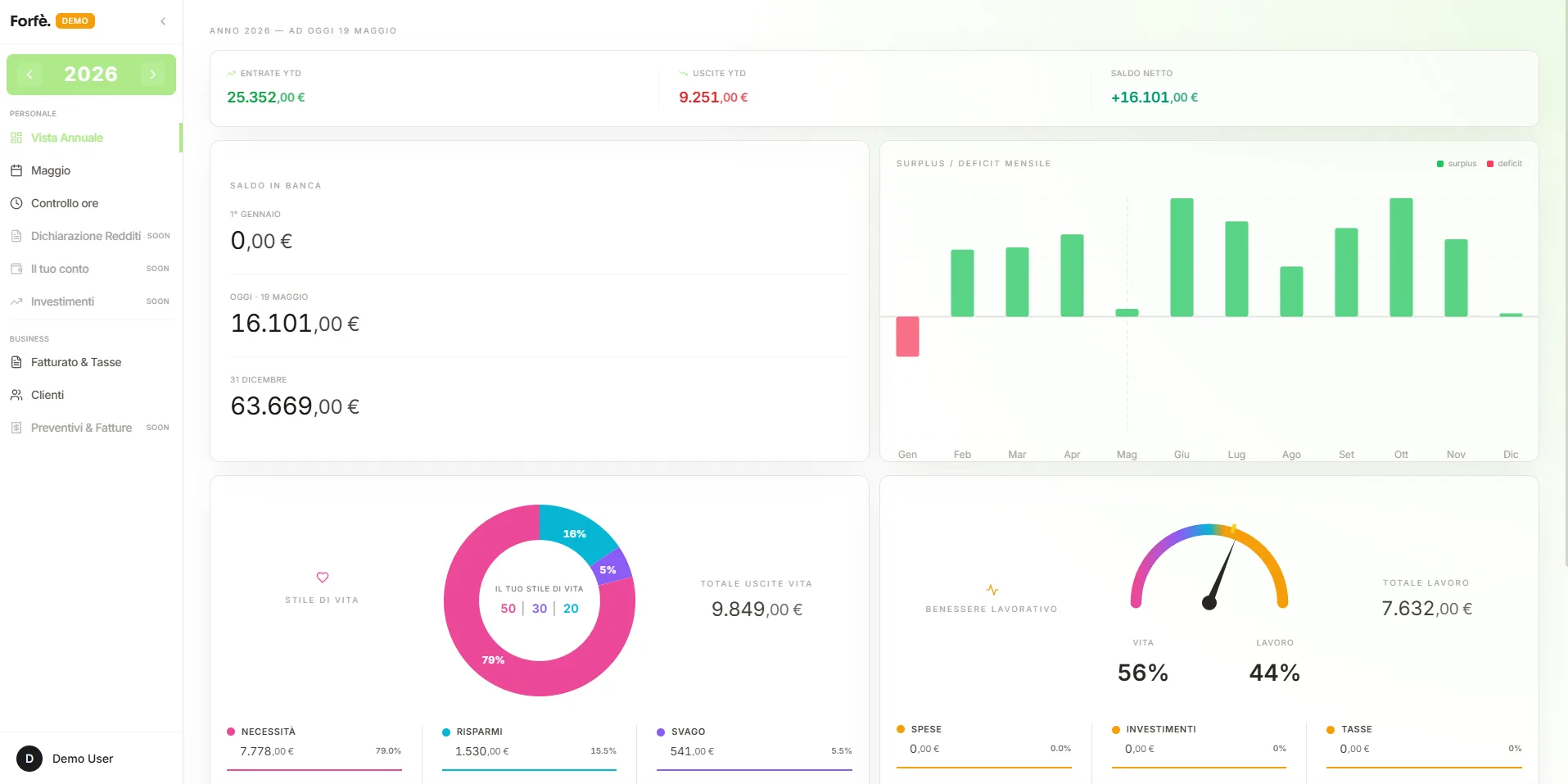
Forfè is an analytics, management, and forecasting tool for freelance finance, designed and built for ourselves as freelancers in the Italian flat-rate tax regime. Not another app for sending invoices to the accountant, but a pre-accounting layer that speaks the language of the digital freelancer before it becomes fiscal data: what happened, what's happening, what could happen.
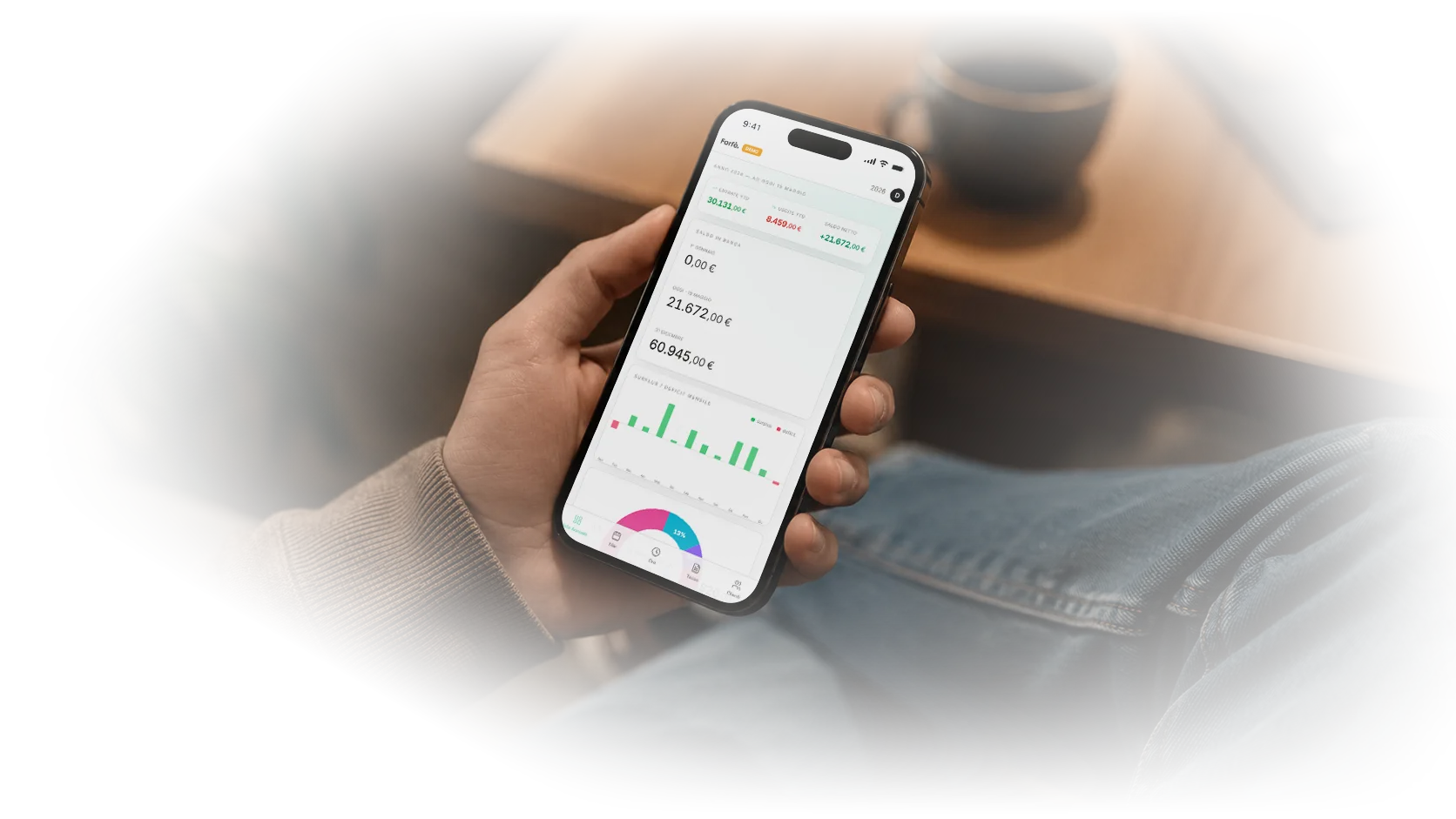
A product built from the freelancer's side
The Italian market of fiscal tools for the flat-rate tax regime exists, and it’s dominated by the same viewpoint: the accountant’s. The app helps the professional invoice on behalf of the freelancer, or automates data delivery to the consultant. In every case, the freelancer is described as “the accountant’s client”, not as the main user of the tool.
Forfè starts from the opposite side. It was built for us as freelancers: first user, first designer, first developer. A founder-built product born from a real need of someone who lives the flat-rate regime every day, not from an abstract product brief.
Development started in December 2024 and continues today. Pragmatic stack, fully self-hosted: no trendy full-stack framework, no third-party cloud services. Everything inspectable, everything under control.
The invisible complexity of the flat-rate regime
The Italian flat-rate regime is simple only in theory. Fixed 5% rate for the first five years, 15% after, €85,000 annual revenue cap. In practice it means: ATECO code with variable profitability coefficient (40-86% depending on activity), INPS Separate Management contributions with minimums and maximums updated each year, multiple F24 deadlines (balance and advance payments), in-year provisioning to avoid June surprises, constant threshold monitoring to stay in the regime.
All of this is currently handled by the freelancer in three ways: with an accountant on annual retainer, with a homemade Excel sheet, or with a vertical SaaS tool that speaks the accountant’s language (causale, double-entry bookkeeping, tax filings, F24 to sign).
A fourth option is missing: the tool that speaks the freelancer’s language, that declares its opacity instead of hiding it, that self-corrects when forecasts diverge from reality, and that coexists with the freelancer’s non-fiscal life.
Information design as strategy
Design is not an aesthetic layer. It’s the method by which Italian fiscal complexity is made readable, turning it into signal, into action, into qualitative judgment. Four information design decisions guided the construction of Forfè:
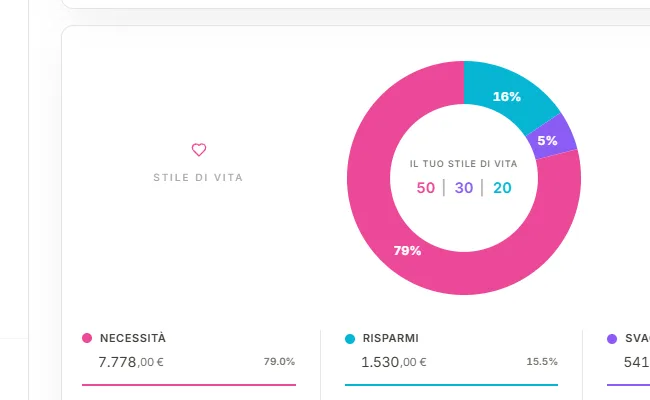
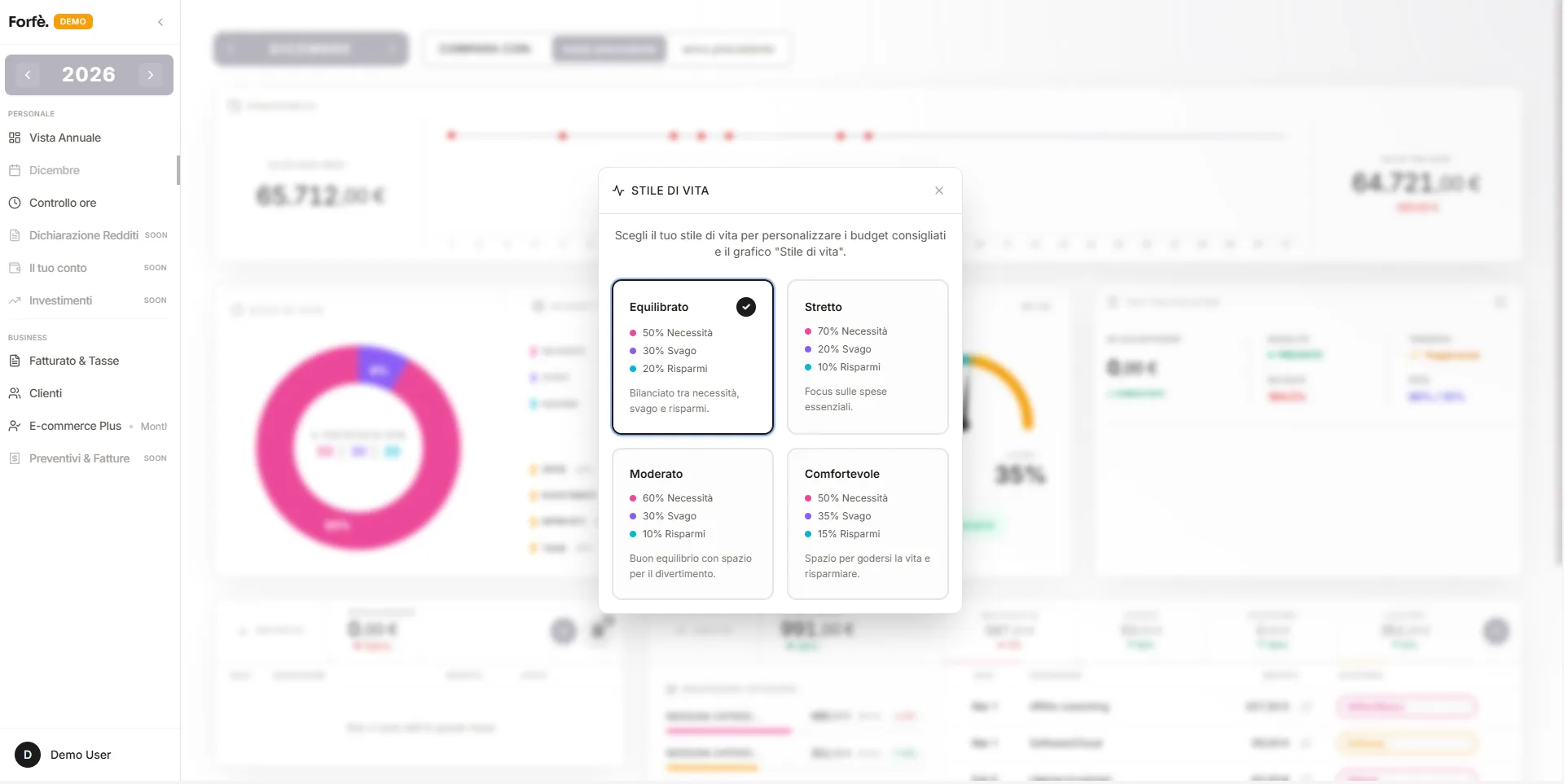
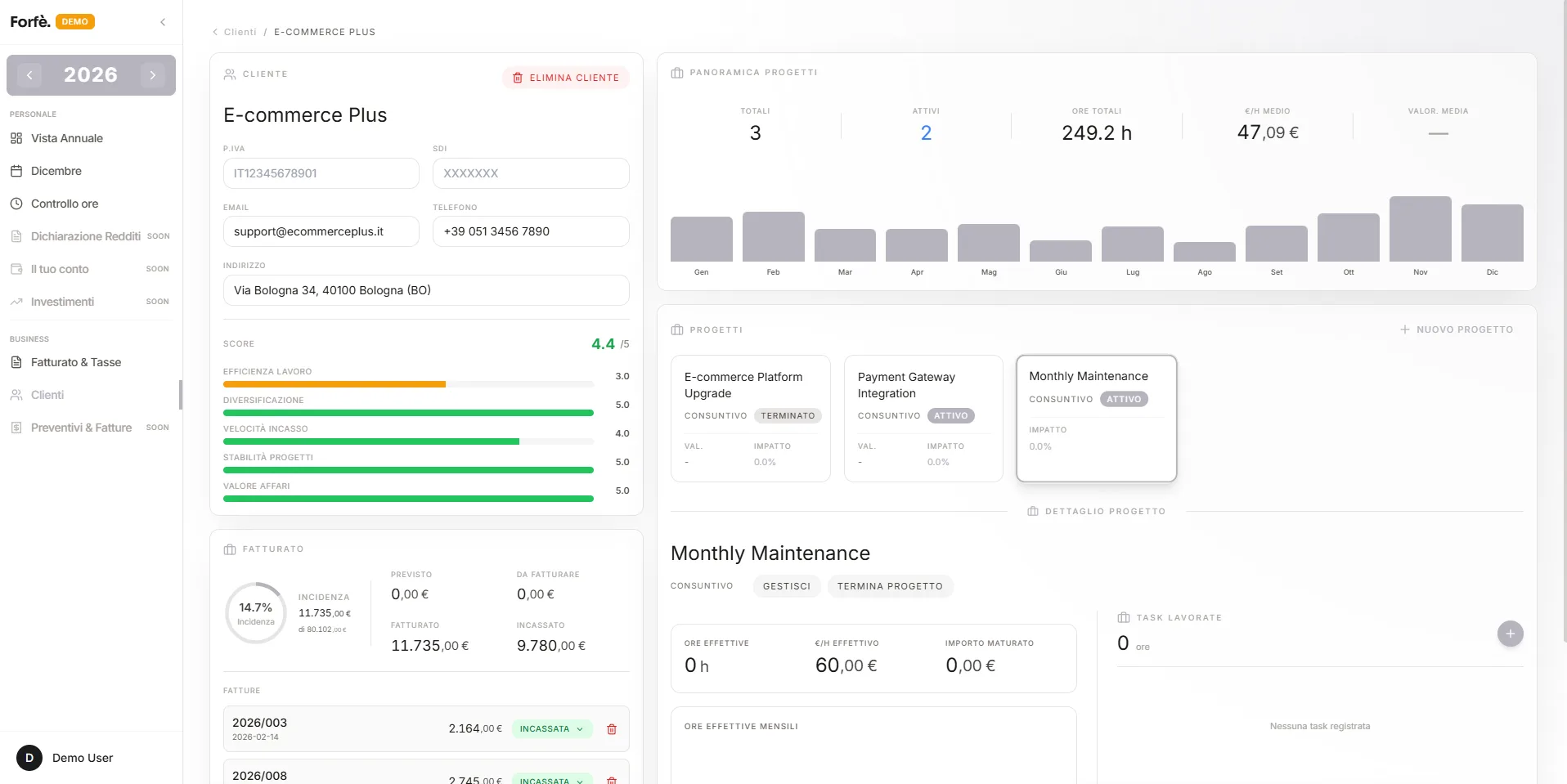
Color as a temporal variable
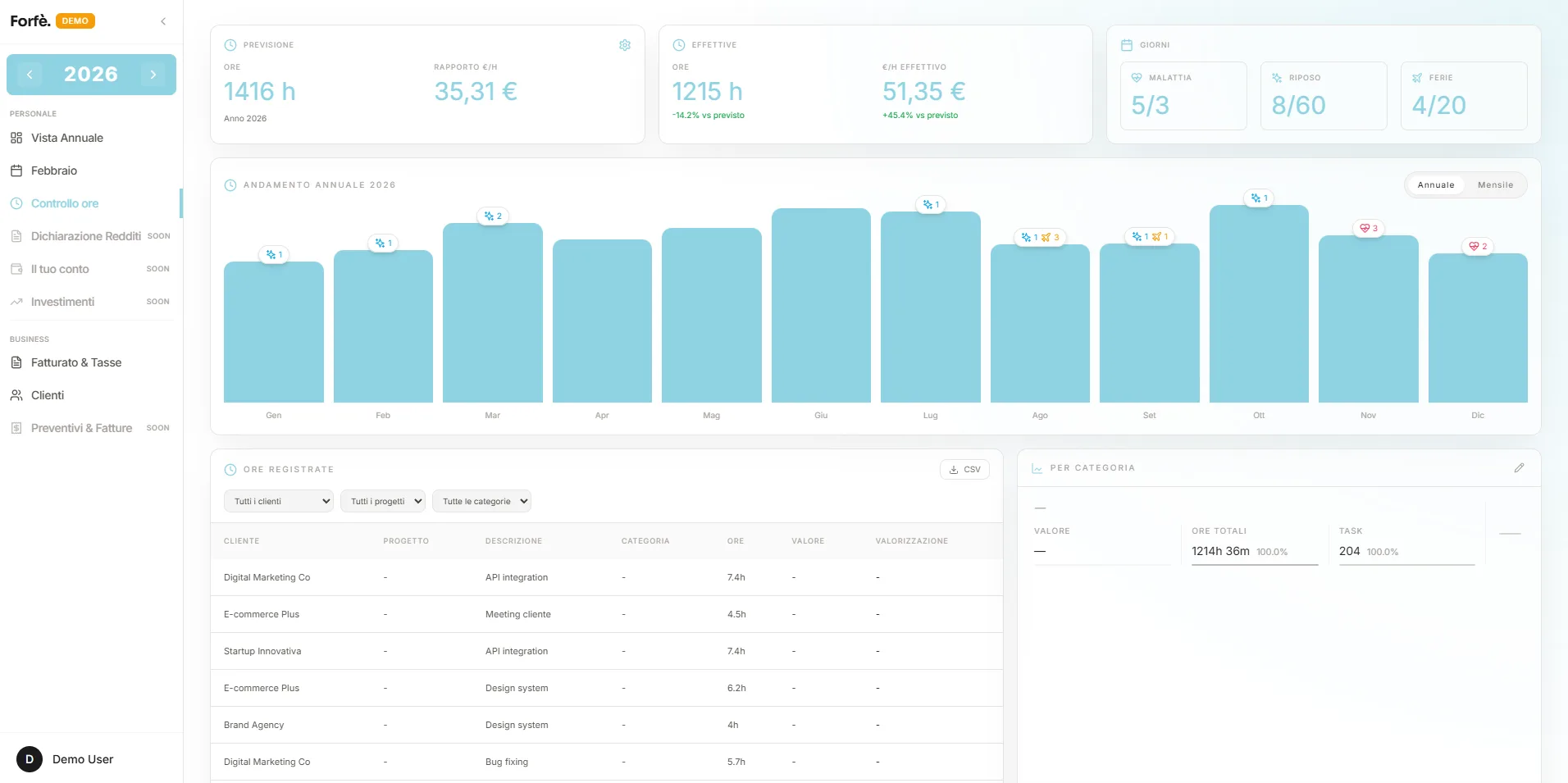
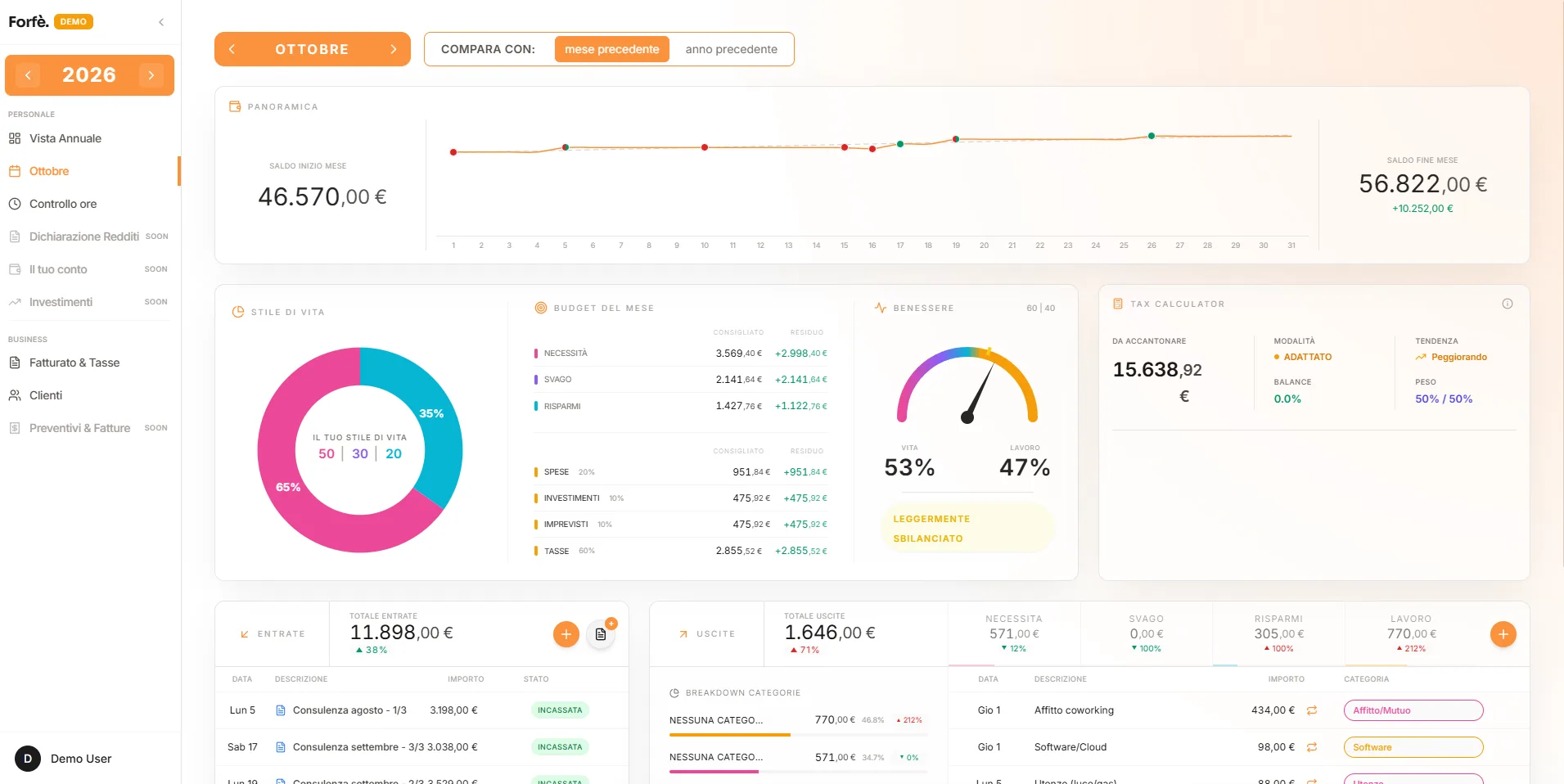
Italian competitors use a fixed corporate accent across the entire UI, all year long. Forfè makes the opposite choice: the interface accent is a function of the displayed month. Four anchor colors (one per season, defined by the user) linearly interpolate in RGB across the twelve months, generating in real time a “seasonal” color that drives header, today indicator, gradient, hover, active bottom-nav.
For a tool used twelve months a year, this is a strong information design choice: the user “feels” what month they’re operating in without reading it. Time perception becomes a chromatic variable, not a label. Opening Forfè in January and in July is visually a different experience, and rightly so.
The €85,000 threshold as a chromatic wall
The €85,000 threshold is the flat-rate freelancer’s “fiscal death line”: the limit beyond which you leave the regime, fundamentally changing your business strategy and taxation the following year. Most tools show it as a neutral percentage progress bar. Forfè promotes it to a primary alert, with progressive chromatic states: amber at €80,000, saturated red above €85,000, with the explicit message “FLAT-RATE LIMIT EXCEEDED”.
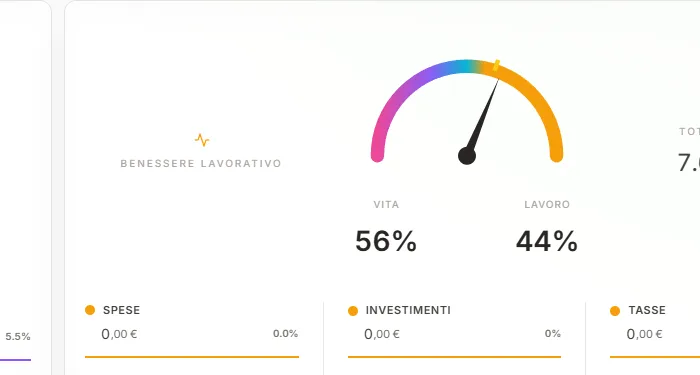
Same logic in the hours-worked module: the annual revenue target is compared against the legal limit, not against an arbitrary goal. If you set a target above €85,000, the app warns you that you’re planning your exit from the regime. The design is built around the rule that matters most for the target, not hidden in a tooltip, but promoted to the highest visual rank.
The self-correcting tax calculator
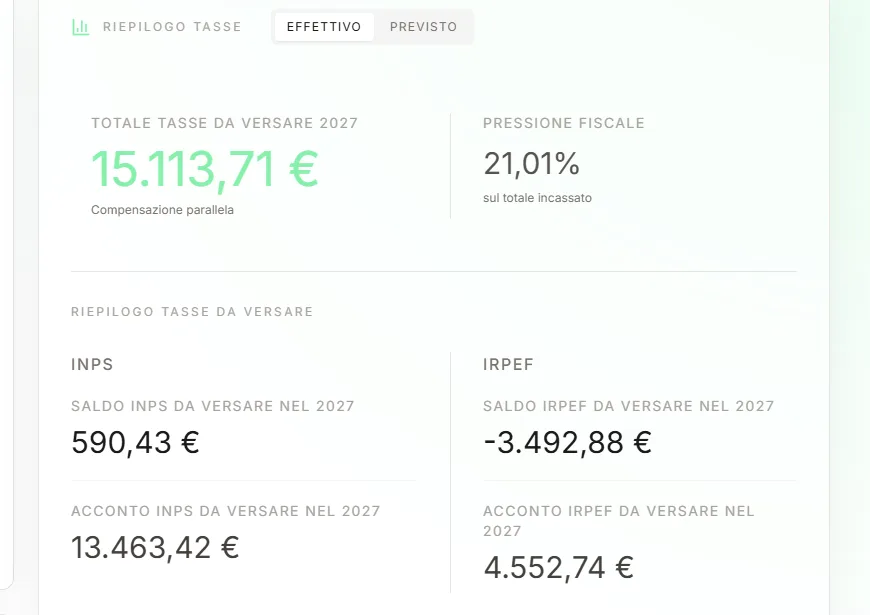
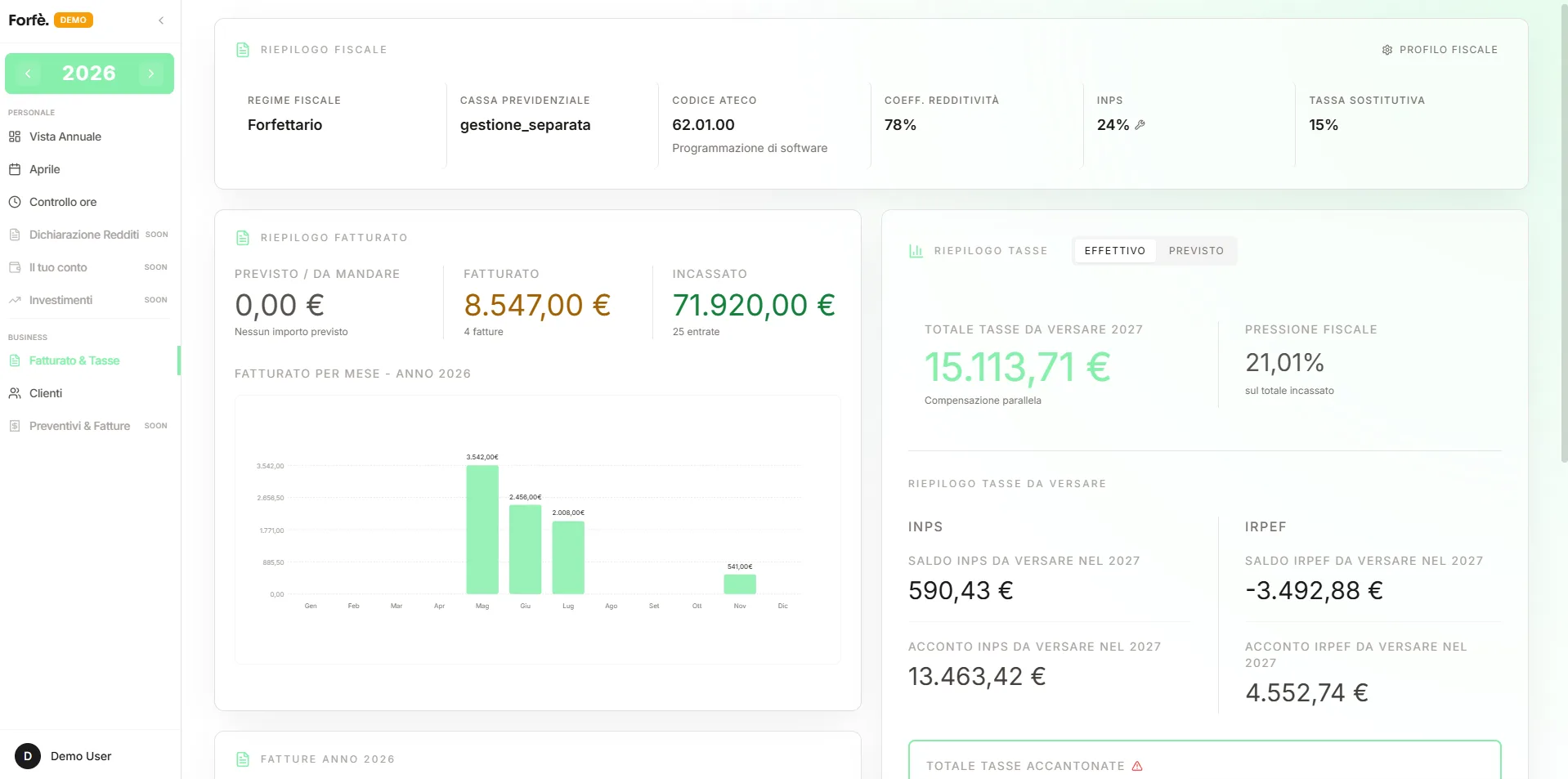
Standard tax forecasts are snapshots: an annual estimate that doesn’t self-correct over time. Forfè implements a feedback loop. Beyond the “actual” calculation on what’s been collected, the app continuously estimates the “projected” on invoices still open. Month by month, the percentage deviation between projected and paid is tracked and accumulated as history.
The monthly provisioning module uses that history to adapt the current month’s set-aside: if the forecast was optimistic in past months, current provisioning grows to compensate; if it was pessimistic, it relaxes. The calculation isn’t an oracle saying “here’s what you’ll pay in June”. It’s an opinion that refines over time, declaring its own error.
Forecasting lives in two dimensions. Guided: the calculation that refines itself with the history of previous months, declaring its own deviation. It tells you where you are, where you’d be if the current trajectory continued. Simulated: the same calculation engine, but on hypothetical parameters chosen by the user. It answers “what happens if I take that €8,000 client in September?” or “what changes if I raise my hourly rate by 15% from next month?”. Two tools for two different decisions: understanding where you are, deciding where to go.
Forfè today: a laboratory product
Forfè is in closed beta. The database contains one active user: the founder. This is coherent with the product’s current moment: a personal laboratory where the designer is also the first tester, and every decision passes through real use before stabilizing.
The development timeline tells a precise story. December 2024: setup and initial ramp, one week of intensive work. January 2025: month of maximum construction. Centralized tax calculator, seasonal theme, foundations of the data architecture. February 2025: vacation planner and automatic backup system, introduced after a real near-disaster of accidental data deletion, an incident the founder lived through as the first user. March and April 2025: slowdown and targeted refinements, the phase in which the product stops growing and starts being lived in.
The next step is finding the second and third users: commercial partners, investors, freelancers looking for the tool that doesn’t exist today. Forfè isn’t a startup ready to scale. It’s a laboratory product of a designer searching for truth in their niche, and who for now has answers only for themselves. But a well-written answer can become the answer for many.
Numbers
+10
Users in alpha test
Test in progress
2
Years of development
Prototype to beta, self-hosted
360°+
Of control and overview
Analytics, management, forecast
Have a similar project?
Let’s talk about the next project.
Performance & Interaction Design Studio. Every client followed personally, from brief to delivery.